


Choose the correct acridine ester to easily achieve antigen/antibody protein labeling
Release time:
2024-09-04
In biomedical research, the labeling technology of antigen/antibody proteins has always been a hot topic of concern for scientists. Among numerous labeling methods, acridine esters have gradually gained favor among researchers due to their unique chemical properties and broad application prospects. However, there are many types of acridine ester products, and how to choose one that suits oneself has become a difficult problem for many researchers. Next, let's explore together.
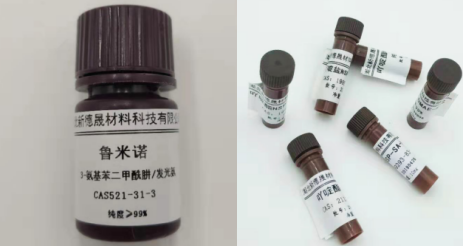
Product packaging
To answer this question, we need to first understand what acridine ester is. Acridine esters are a class of compounds with fluorescent properties that can emit strong fluorescent signals under specific excitation light, and are therefore widely used in fields such as biological imaging, biological detection, and protein labeling. The labeling of antigen/antibody proteins is achieved through chemical reactions that bind acridine esters to proteins, thereby enabling protein tracking and detection.
When choosing acridine esters, we need to consider their active groups and reaction conditions. Different acridine esters have different active groups, such as NHS active esters, maleimide, iodoacetamide, etc., which determine the binding mode and reaction conditions of acridine esters with proteins. In addition, reaction conditions such as pH value, temperature, reaction time, etc. can also affect the labeling effect.
In the product line of Desheng Company, we offer 6 different groups of acridine esters for customers to choose from. These products each have their own characteristics and are suitable for different labeling needs. But if you are confused about how to choose, we can recommend an acridine ester that is suitable for most antigen/antibody protein labeling - acridine ester with NHS active ester.
Acridine esters with NHS active esters have the following advantages: 1. NHS active esters have high reactivity with the amino groups of proteins and can be labeled in a short period of time; 2. The reaction conditions are mild, do not require other catalysts or condensing agents, and are easy to operate; 3. The labeled protein has good stability and can be stored and tested under various conditions.
Compared with other acridine esters without active esters, acridine esters with NHS active esters do not require condensing agents, greatly simplifying the labeling process and reducing operational difficulty. More importantly, NHS type acridine esters remain active in neutral to alkaline environments, allowing the labeling process to be carried out under a wider range of conditions without worrying about the impact of alkaline environments on the reaction.

acridine esters NSP-SA-NHS
Although NHS type acridine esters (such as acridine esters NSP-SA-NHS) stand out for their versatility and convenience, selecting the appropriate acridine ester still requires consideration of specific experimental requirements. For example, different antigens or antibodies may have different requirements for the steric hindrance, hydrophilicity, or hydrophobicity of the label. Some experiments may require stability under specific conditions, such as pH or temperature. Therefore, a deep understanding of the physical and chemical properties of each acridine ester, as well as their interactions with the molecules to be labeled, is the key to selecting suitable acridine esters.
The acridine ester produced by Desheng has become the choice of many researchers due to its high efficiency, simplicity, and stability. Our professional team can not only provide detailed product usage guidelines, but also recommend suitable labeling schemes based on customers' specific needs, allowing you to personally verify the performance of the product and ensure that every investment can result in scientific research output.
Contact details
Contact number
Address: C8, Guanggu United Science and Technology City, Ezhou City, Hubei Province
Fax:0711-3704 589
Follow us
