


What are the important indicators for evaluating the performance of PIPES buffer
Release time:
2024-08-06
PIPES (piperazine-1,4-diethylsulfonic acid) is a commonly used biological buffering agent, widely used in biochemical and molecular biology experiments. The quality of its performance directly affects the experimental process. Therefore, a comprehensive evaluation of the performance of PIPES buffer and clarification of its important indicators are key to ensuring the smooth progress of the experiment. Below, we will discuss in detail the performance evaluation indicators of PIPES buffer.
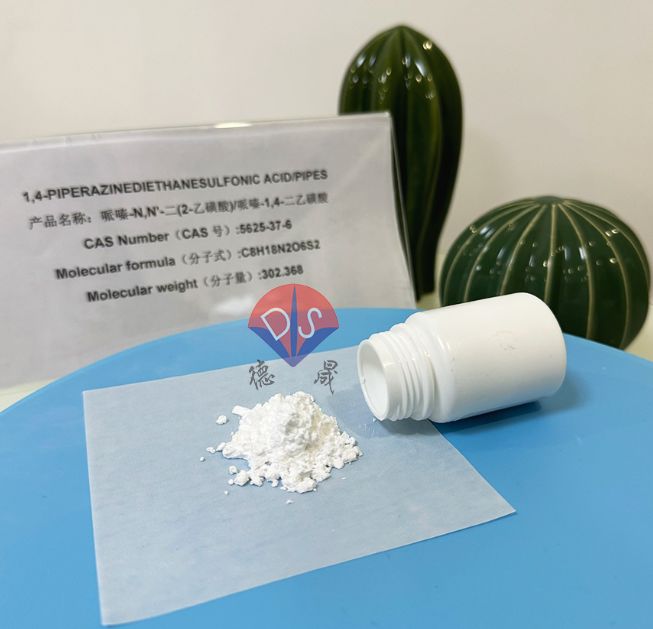
PIPES buffer
The pKa value and stability of PIPES buffer
1. The importance of pKa value
PKa value is one of the key indicators for measuring the performance of buffering agents. It represents the acidity constant of the buffer in aqueous solution. The pKa value of PIPES is 6.8, which is the basis for its use as a buffering agent in neutral and weakly acidic environments. In the experiment, the pH buffering range of the buffer should be as close as possible to the pKa value to ensure its high buffering capacity.
2. Stability of pKa value
The pKa value of buffering agents should remain stable under different conditions, including temperature, ionic strength, and concentration. Experiments have shown that the pKa value of PIPES is relatively stable at 25 ° C, but may fluctuate with significant temperature changes. Therefore, a constant temperature should be maintained as much as possible during the experiment to ensure buffering effect.
PIPES buffer range and capability
1. Buffer range
The buffering range of PIPES buffer is 6.1-7.5, which means it is suitable for neutral to acidic experimental conditions. In the experiment, appropriate buffering agents should be selected according to specific needs to ensure sufficient buffering capacity within the required pH range.
2. Buffer capacity
Buffer capacity refers to the ability of a buffer to resist pH changes. PIPES exhibits good buffering ability within its buffering range, which can resist external acid-base interference and maintain the pH stability of the solution. This is particularly important for pH sensitive biochemical reactions, such as protein purification and enzymatic reactions.
PIPES water solubility and solubility
1. Water solubility
The water solubility of PIPES buffer is one of the important indicators for its performance evaluation. PIPES itself is insoluble in water and usually needs to be dissolved in NaOH aqueous solution to make a buffer solution. This characteristic requires special attention to the control of solubility when configuring the buffer to ensure the uniformity and stability of the buffer.
2. Solubility
PIPES has a high solubility in NaOH solution and can meet the requirements of different concentrations in experiments. When configuring, the powder should be accurately weighed based on the molecular weight of PIPES (302.368) to ensure sufficient dissolution, and the pH value should be adjusted as needed.
The interaction between PIPES and metal ions
PIPES is different from buffering agents containing di (2-hydroxyethyl) amino groups, as it does not form stable complexes with most metal ions. This characteristic makes it suitable for solution systems containing metal ions, especially in experiments involving metal ion catalyzed reactions, which can avoid the interaction between buffering agents and metal ions and affect the experimental results.
PIPES biocompatibility
PIPES buffer has good biocompatibility, no toxic side effects on experimental materials and biological systems, and is suitable for various biochemical experiments. PIPES buffer can provide a stable experimental environment in cell culture and biological analysis, ensuring that experimental results are not affected.

Product packaging
Through a comprehensive evaluation of the performance of PIPES buffer, it can be seen that it performs well in pKa value, buffering range and capacity, water solubility, and interaction with metal ions. The excellent performance of these indicators makes PIPES buffer an ideal choice for biochemical and molecular biology experiments. When selecting buffering agents, experimenters should fully consider these performance indicators based on specific experimental needs.
As a professional PIPES biological buffer manufacturer, Desheng is committed to providing high-quality raw material powders with a purity of over 99%. We strictly control every step of the production process, from raw material procurement to finished product packaging, and follow quality standards at every step. Ensure that the purity and quality of each batch of products meet the customer's requirements. If you have any relevant intentions, please click on the website to inquire about details and purchase!
Contact details
Contact number
Address: C8, Guanggu United Science and Technology City, Ezhou City, Hubei Province
Fax:0711-3704 589
Follow us
