


The advantages of high signal-to-noise ratio of acridine ester NSP-DMAE-NHS
Release time:
2024-06-28
In the field of chemiluminescence detection, Signal to Noise Ratio (SNR) is one of the important indicators to measure detection performance. High signal-to-noise ratio means that during the detection process, the signal strength is much higher than the background noise, thereby improving the sensitivity of detection, reducing false detection rates, and enhancing the reliability of data. Among numerous chemiluminescence reagents, acridine ester NSP-DMAE-NHS has become an ideal choice in the field of chemiluminescence immunoassay due to its chemical structure, excellent performance, especially high signal-to-noise ratio. This article will provide a detailed introduction to the advantages of high signal-to-noise ratio of acridine ester NSP-DMAE-NHS.
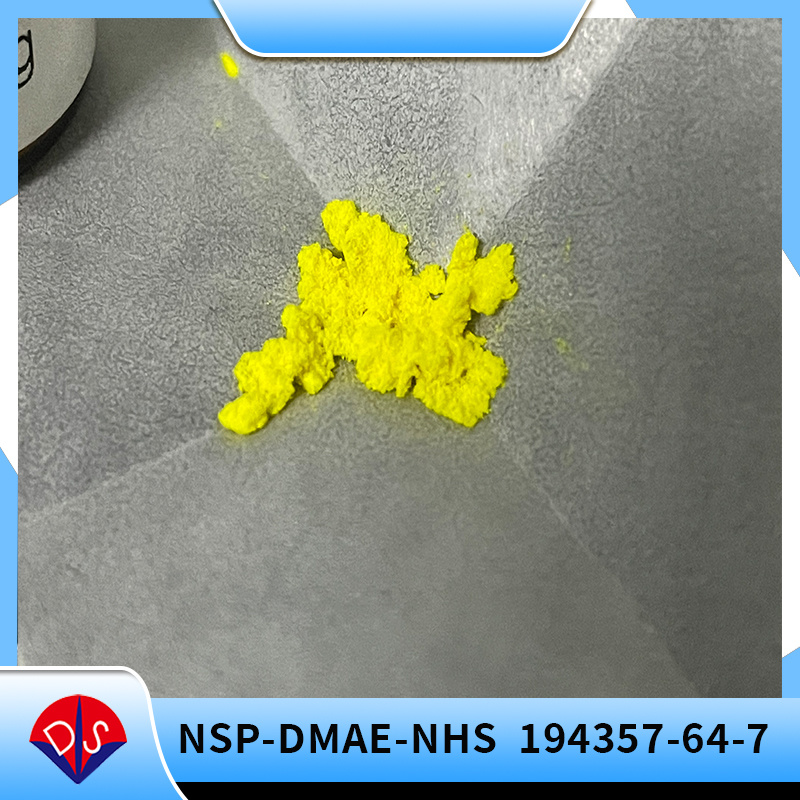
acridine ester NSP-DMAE-NHS
Chemical structure and properties of acridine ester NSP-DMAE-NHS
NSP-DMAE-NHS is a chemiluminescent reagent, in which the N-sulfopropyl group in its molecular structure endows the compound with good water solubility, while the acridine ester group determines its excellent chemiluminescent properties. This structure gives acridine ester NSP-DMAE-NHS significant advantages in the field of chemiluminescence. It has good water solubility, is easy to bind with biomolecules, and the photon yield does not decrease after binding, thus ensuring its reliability in biological analysis.
The advantages of high signal-to-noise ratio
1.Improve detection sensitivity
High signal-to-noise ratio means that during the detection process, the signal strength is much higher than the background noise. This allows for increased signal visibility and sensitivity by increasing the signal-to-noise ratio even when there are fewer target molecules in the sample. In biomedical research, this high sensitivity is of great significance for early diagnosis and evaluation of diseases.
2.Reduce false detection rate
Due to the more obvious distinction between signal and noise, a high signal-to-noise ratio can reduce the false detection rate. In chemiluminescence detection, the false detection rate is usually caused by noise interference. A high signal-to-noise ratio increases the visibility of the signal in noise, thereby reducing false detection results caused by noise interference. This is of great significance for improving the accuracy and reliability of detection.
3.Enhance data reliability
High signal-to-noise ratio makes the detection results more stable and reliable. In multiple repeated experiments, high signal-to-noise ratio can ensure the stability and consistency of the detection results, thereby enhancing the reliability of the data. This is of great significance for scientific research and clinical diagnosis.
4.Expand the detection range
The high signal-to-noise ratio expands the detection range. In chemiluminescence detection, the detection range is usually limited by signal strength and noise level. High signal-to-noise ratio allows for enhanced signal visibility even in weak signal conditions, thereby achieving a wider detection range. This is of great significance for expanding the application fields of chemiluminescence detection.
Application prospect
Due to the high signal-to-noise ratio advantage of acridine ester NSP-DMAE-NHS, it has broad application prospects in fields such as biological analysis and environmental monitoring. In biomedical research, it can be used to label biomolecules such as proteins, nucleic acids, and peptides, for fluorescence immunoassay, immunohistochemistry, protein interaction research, and so on. In addition, it can also be used for cell and tissue labeling, providing strong support for biomedical research. In the field of environmental monitoring, it can be used to detect pollutants and harmful substances, providing important basis for environmental protection and governance.
Conclusion
In summary, the chemiluminescent reagent NSP-DMAE-NHS has significant advantages in the field of chemiluminescence immunoassay due to its high signal-to-noise ratio. It can improve the sensitivity of detection, reduce false detection rates, enhance data reliability, and broaden the detection range. With the continuous development and progress of science and technology, it is believed that this chemiluminescent reagent will be widely used in more fields and make greater contributions to the development of human society.

Product packaging
NSP-DMAE-NHS, as a cutting-edge chemiluminescent reagent, has attracted much attention due to its luminescent wavelength and high signal-to-noise ratio characteristics. With the continuous innovation of luminescent technology, we firmly believe that acridine ester NSP-DMAE-NHS will play a more critical role in the vast field of biological research, opening new doors for researchers to explore.
As an established supplier in the field of acridine esters, Desheng Company offers products with six functional groups, which not only have high purity but also excellent luminescence sensitivity. We provide personalized customization services to ensure that you receive reagents that meet your experimental needs.
As a direct manufacturer, Desheng can provide you with more competitive prices, making your scientific research investment more cost-effective. If you have any interest or questions about acridine ester NSP-DMAE-NHS or its related products, please feel free to contact us at any time. We look forward to working with you to create a new chapter in scientific research!
Contact details
Contact number
Address: C8, Guanggu United Science and Technology City, Ezhou City, Hubei Province
Fax:0711-3704 589
Follow us
