


What is the difference between BES and PBS buffers? Differences to be aware of
Release time:
2024-06-15
In biochemical and molecular biology experiments, buffer families are commonly used to maintain pH stability under experimental conditions. Among them, BES (dihydroxyethylaminoethanesulfonic acid) and PBS (phosphate buffer solution) are two commonly used buffer solutions due to their similar names. Many people easily confuse them, but in fact, they have significant differences in composition, properties, and applications.
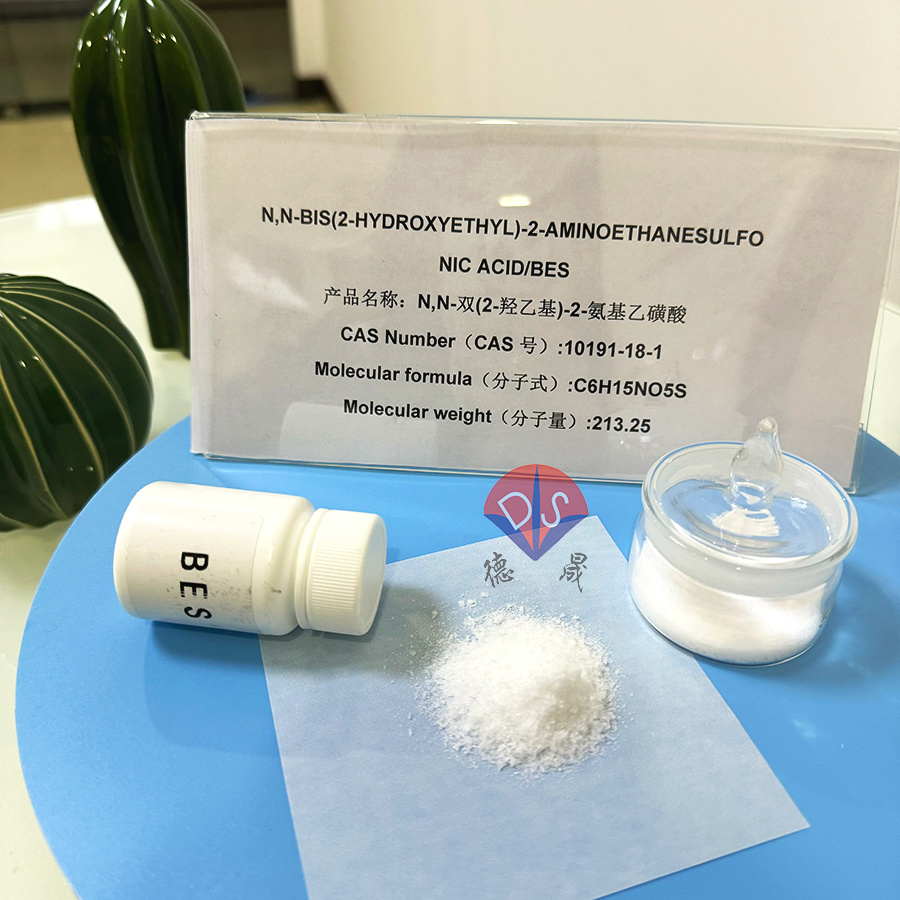
BES buffer
BES buffer
1. Structure and properties
BES buffer, Dihydroxyethylaminoethanesulfonic acid, with a white crystalline powder appearance, CAS number 10191-18-1, molecular formula C6H15NO5S, and pKa of 7.1 at 25 ° C. The structure of BES is similar to Bicine, but its aminoacetic acid group is replaced by aminoethanesulfonic acid, which makes BES have excellent chemical properties and application scenarios to a certain extent.
2. Application field: BES is mainly used as a biological buffer, such as a binding buffer and solution in cation exchange chromatography, and a buffer in colloidal filtration chromatography; In addition, BES also holds a place in personal care and cosmetics, serving as an exfoliating ingredient while protecting active ingredients from degradation.
PBS buffer
1. Structure and properties: PBS, also known as phosphate buffer salt solution, is mainly composed of Na2HPO4, KH2PO4, NaCl, and KCl components, with a wide buffering range. PBS is one of the widely used buffer solutions in biochemical research, mainly used as a solvent to dissolve and protect reagents.
2. Application field: PBS can be used to dilute serum due to its salt balance and adjustable pH buffering effect; In cell culture, it can be used to wash cells and maintain the stability of the extracellular environment.
3. Advantages and limitations of PBS buffer
Advantages:
(1) PBS has a wide buffering range and is suitable for various biochemical experiments.
(2) Its ingredients are simple, easy to prepare and use.
(3) Can maintain the structure and function of bioactive substances.
Limitations:
(1) In a solution system containing metal ions, phosphates can combine with Ca ions, Mg ions, and heavy metal ions to form precipitates, which may interfere with the results in some experiments.
(2) In some specific electrophoresis experiments, such as SDS polyacrylamide gel electrophoresis, PBS has been replaced by Tris buffer, because Tris buffer performs better in such experiments.
The application of BES and PBS buffers in biochemical and molecular biology experiments has their own characteristics. BES exhibits good stability within a specific pH range and is suitable for chromatography technology and personal care fields. PBS, due to its wide buffering range and good solubility, is widely used in cell culture, dilution of biological agents, and protein nucleic acid research.

Product packaging
When selecting buffering agents, experimenters should choose appropriate buffer solutions based on specific experimental requirements and system characteristics. Fully understanding the differences and application scenarios between the two can also help make ideal choices in experimental design and operation.
As a professional chemical reagent supplier, Desheng sells buffering agents, and BES (dihydroxyethylaminoethanesulfonic acid) has a purity of over 99%. It has a wide range of applications and can meet the diverse needs of customers. Due to its manufacturer's research and development, customization is acceptable and sample services are provided. On June 18th, Desheng is currently offering a low price promotion and a large discount in bulk. If you have any relevant intentions, please feel free to click on the website to inquire about details and purchase at any time!
Contact details
Contact number
Address: C8, Guanggu United Science and Technology City, Ezhou City, Hubei Province
Fax:0711-3704 589
Follow us
