


Chromogenic substrates play an important role in the study of disease targets
Release time:
2024-04-30
When it comes to diseases, we are not unfamiliar, but when it comes to disease targets, we may have a big question mark in our minds. What are disease targets, how are chromogenic substrates studied for disease targets, and what types of chromogenic substrates are included? This article will provide a detailed introduction to the relationship between these two, allowing you to speak confidently in a field that is so professional and close to our daily lives.

chromogenic substrates
What are the disease targets
A disease target refers to a specific molecule or structure that plays a crucial role in the progression of a disease during its occurrence and development. These can be biomolecules such as proteins, genes, metabolites, etc., which are involved in the pathological and physiological processes of diseases and may serve as potential drug action sites. Identifying disease targets is a crucial step in drug development. Once these key molecules or structures are identified, researchers can design specific drugs for them to intervene or block disease progression.
The relationship between chromogenic substrates and disease targets
The relationship between chromogenic substrates and disease targets is mainly reflected in the process of drug development and disease diagnosis. Firstly, in the field of drug development, chromogenic substrates are commonly used to evaluate the interaction between drugs and disease targets. Disease targets are the key points of drug action, and drugs exert their therapeutic effects by binding to these targets.
In order to verify the binding ability and specificity between drugs and targets, chromogenic substrates are often used as a detection method. These substrates can react with specific enzymes or proteins to produce visual color changes. When a drug binds to a target, this binding may affect the interaction between the chromogenic substrate and the target, thereby altering the outcome of the color reaction. By observing these color changes, researchers can indirectly understand the interaction between drugs and targets, and evaluate the activity and efficacy of drugs.
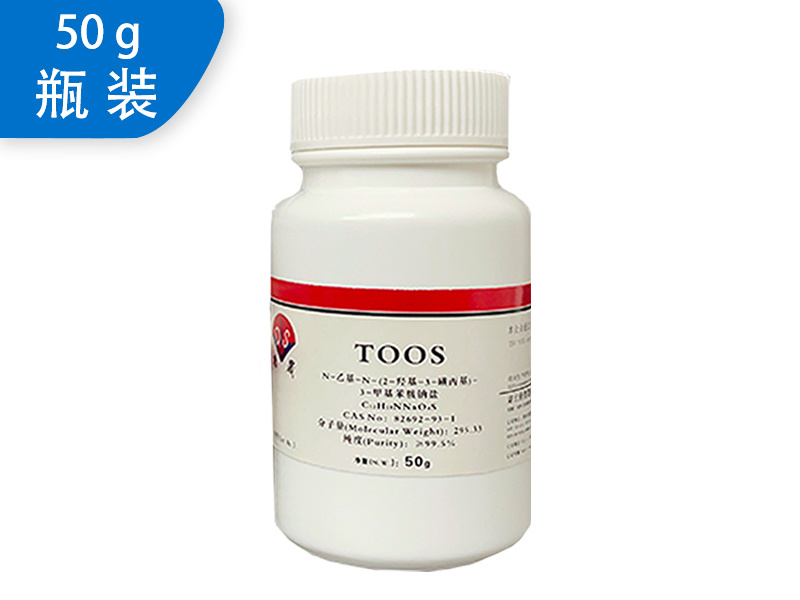
Product packaging
What types of chromogenic substrates are included
There are many types of chromogenic substrates, and Desheng mainly produces more than ten types of chromogenic substrates, including TOOS, TOPS, DAOS, HDAOS, etc. These chromogenic substrates have their own advantages and can be used to detect target molecules related to diseases. The presence and quantity of these biomarkers can be detected in patient samples to assist in the diagnosis of diseases.
Colorful substrates play an important role in the research of disease targets, and Desheng can provide you with high-quality colorimetric substrate products. Through its visual characteristics, it provides powerful tools for the research of disease targets. By observing and measuring color reactions, scientists can gain a deeper understanding of the interaction between drugs and targets, providing important clues and directions for the development of new drugs.
Contact details
Contact number
Address: C8, Guanggu United Science and Technology City, Ezhou City, Hubei Province
Fax:0711-3704 589
Follow us
