


Analysis of the causes of small coagulation fragments in EDTA potassium trioxide tubes after blood collection
Release time:
2024-04-04
In the daily work of medical laboratories, we often use EDTA potassium tubes to collect and analyze blood samples. However, sometimes after blood collection, we may find some small clotting fragments in the EDTA potassium trioxide tube, which has attracted our attention. In order to gain a deeper understanding of this phenomenon, this article will conduct a detailed analysis of its causes from multiple perspectives.
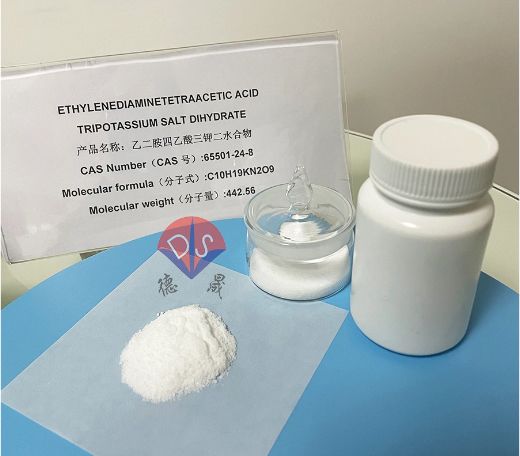
EDTA tripotassium powder
The anticoagulant mechanism of EDTA tripotassium
We need to understand the anticoagulant mechanism of EDTA tripotassium. EDTA tripotassium is a chelating agent that can bind with calcium ions in the blood, thereby preventing the occurrence of coagulation processes. Under normal circumstances, when blood is fully mixed with EDTA tripotassium, calcium ions in the blood are chelated by EDTA tripotassium, and the coagulation process is inhibited, thereby ensuring the smooth flow of blood samples and the accuracy of analysis.
Possible causes of coagulation debris in EDTA potassium trioxide tubes
However, in practical operation, we may find some small clotting fragments in the EDTA potassium trioxide tube. The appearance of these coagulation fragments may be caused by the following reasons:
1. Improper blood collection operation: During the blood collection process, if the blood collection vessel is not fully mixed with the blood in a timely manner, or if the blood collection speed is too fast, causing the blood to form vortices in the tube, it may cause some blood to not fully contact with EDTA potassium, leading to coagulation.
2. Uneven concentration of anticoagulants: If the concentration of anticoagulants in EDTA potassium trioxide tubes is uneven, some blood may coagulate due to insufficient contact with anticoagulants. This may be due to uneven distribution of anticoagulants in the tube, or an inappropriate ratio of anticoagulants to blood.
3. Abnormal blood composition: In some cases, the patient's blood composition may be abnormal, such as excessive platelet count or hyperfunction, which may lead to blood clotting more easily in EDTA potassium channels. In addition, some pathological conditions, such as thrombophilia and hypercoagulability, may also lead to the formation of clotting fragments in the blood in EDTA potassium channels.
4. Improper storage conditions: If the blood collection tube is not reversed and mixed in a timely manner after collection, or is affected by factors such as vibration and temperature changes during storage, it may lead to the formation of small clotting fragments in the tube.
The impact of coagulation fragments on blood analysis
The appearance of small coagulation fragments in EDTA potassium trioxide tubes may affect the accuracy of blood analysis. Coagulation fragments may interfere with the normal detection of the instrument, leading to deviations in the test results. Secondly, the cells in the coagulation fragments may have undergone morphological and functional changes, which cannot reflect the true blood condition. In addition, coagulation fragments may also affect the accuracy of blood count and classification, thereby affecting the diagnostic decisions of doctors.
How to avoid clotting debris in EDTA potassium trioxide tubes
To avoid clotting debris in EDTA potassium trioxide tubes, we can take the following measures:
1. Standardized blood collection operation: During the blood collection process, it is necessary to ensure that the blood collection vessel is fully mixed with the blood to avoid the formation of eddy currents in the tube. At the same time, it is necessary to control the speed of blood collection to avoid excessive contact between blood and anticoagulants.
2. Check the concentration of anticoagulants: Before using EDTA potassium trioxide tubes, check if the concentration of anticoagulants is uniform to ensure that the ratio of blood to anticoagulants is appropriate. If uneven concentration or inappropriate proportion of anticoagulants are found, the blood collection vessel should be replaced in a timely manner.
3. Pay attention to the patient's blood composition: For patients with abnormal blood composition, such as excessive platelet count or hyperfunction, other types of blood collection vessels or adjusting the type and concentration of anticoagulants can be considered.
4. The storage conditions should be appropriate: After collecting blood, the blood collection vessel should be promptly reversed and mixed evenly to ensure that the blood is fully mixed with the anticoagulant. At the same time, it is necessary to avoid the influence of factors such as vibration and temperature changes during storage to maintain the stability of blood samples.

packing of products
conclusion
In summary, the reasons for the appearance of small coagulation fragments in EDTA potassium trioxide tubes after blood collection may involve multiple aspects, including blood collection procedures, anticoagulant concentration, blood composition, and storage conditions. To avoid this phenomenon, we need to standardize blood collection procedures, check the concentration of anticoagulants, pay attention to the patient's blood composition, and maintain appropriate storage conditions. Only in this way can we ensure the accuracy and reliability of blood samples and provide strong support for clinical diagnosis.
Desheng Biochemical has been developing, producing, and selling additives for blood collection for over 10 years, and has formed a complete system. The EDTA series products produced are all used in vacuum blood collection. If you have a purchasing demand, please indicate your purpose before consulting, so that customer service can provide assistance or save purchasing time. Welcome to inquire by phone!
Previous page
Previous page
Contact details
Contact number
Address: C8, Guanggu United Science and Technology City, Ezhou City, Hubei Province
Fax:0711-3704 589
Follow us
