


Will Tris buffer evaporate gas
Release time:
2024-04-01
As a chemical experimenter, it is not only necessary to understand the basic properties and uses of various chemical reagents commonly used in the laboratory, but also to have a deeper understanding of their potential physical and chemical changes. As an important reagent widely used in biochemical and molecular biology experiments, Tris base stability and safety have naturally become a focus of attention. When using it, attention may be paid to whether it will produce gas volatilization, which may affect the stability of the experiment. Below, we will provide a detailed explanation for this issue.
Introduction to the application of Tris buffer solution
Tris can maintain pH stability of solutions over a wide pH range, making it widely used in experiments such as PCR, DNA and protein electrophoresis, and protein purification. It is usually made by mixing Tris bases with appropriate acids (such as hydrochloric acid) to adjust to the desired pH value.
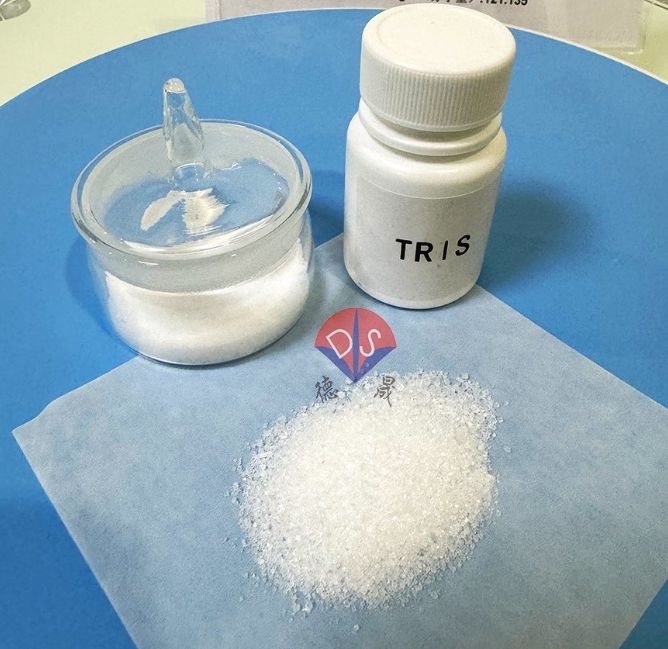
Tris powder
Definition and conditions of gas volatilization
Gas volatilization refers to the process in which a liquid substance transforms from a liquid state to a gaseous state and is emitted into the air at room temperature or under temperature influence. This process usually requires two basic conditions to be met: first, the substance itself has volatility, and second, there is enough energy to transform the substance from liquid to gas.
Will Tris buffer evaporate gas
1. Chemical structure analysis: Tris contains three hydroxyl groups and one amino group in its chemical structure, all of which have strong hydrophilicity. Therefore, Tris molecules tend to bind with water molecules in solution rather than volatilize into the air.
2. Physical property analysis: At room temperature, Tris buffer solution appears as a liquid and has a high boiling point, which means that it is difficult for Tris buffer solution to transition from liquid to gas without external energy input.
3. Experimental verification: In order to verify the gas volatilization properties of Tris buffer solution, a series of verifications were conducted in the laboratory. The experimental results show that under normal temperature and pressure, Tris buffer solution is odorless and does not undergo significant gas volatilization. Even under heating conditions, the gas volatilization amount of Tris buffer solution is very limited.
Factors affecting gas volatilization in Tris buffer solution
Although the gas volatilization of Tris buffer solution is small under conventional conditions, there are still some factors that may affect its volatility:
1. Temperature: As the temperature increases, the volatility of Tris buffer solution increases. High temperature can allow molecules to gain more energy, making it easier to transition from liquid to gas.
2. Solution concentration: The higher the concentration of Tris buffer, the stronger its volatility may be. Because high concentration solutions contain more Tris molecules, these molecules are more prone to volatilization when excited by energy.
3. Environmental conditions: Environmental factors such as air flow and humidity may also affect the volatility of Tris buffer solution. For example, in environments with fast air flow, the volatile Tris molecules are more easily carried away, thereby reducing their concentration in the air.
The impact and countermeasures of gas volatilization in Tris buffer solution
Although the gas volatilization of Tris buffer is small, it may still have an impact on the experiment under certain specific conditions, such as high temperature or concentration. For example, the volatile Tris molecules may undergo chemical reactions with other components in the air, generating new substances that may interfere with experimental results.
To reduce the impact of gas volatilization from Tris buffer solution on the experiment, the following measures can be taken:
1. Maintain appropriate temperature and humidity during the experiment to avoid the impact of high temperature or humidity on the stability of Tris buffer solution.
2. Choose the appropriate Tris buffer concentration according to experimental needs and avoid using solutions with excessively high concentrations.
3. Pay attention to ventilation during the experiment and maintain good air circulation in the laboratory, which can help reduce the concentration of volatile Tris molecules in the air.
4. For experiments with strict requirements for experimental results, it is possible to consider using experimental equipment with good sealing to reduce the gas volatilization of Tris buffer solution.

packing of products
Tris buffer does not undergo significant gas volatilization under conventional conditions, but its volatility may increase under specific conditions, such as high temperature or concentration. In order to reduce the impact of gas volatilization on the experiment, measures should be taken to control it properly.
As an advantageous manufacturer of biological buffer Tris, Desheng provides high-quality Tris buffer products for experiments with its excellent quality, innovative technology, and strict production standards. We are well aware of the importance of Tris, so we continuously invest in research and development, optimize production processes, and ensure product stability and purity. If you are interested, click on the website to inquire about details and purchase now!
Contact details
Contact number
Address: C8, Guanggu United Science and Technology City, Ezhou City, Hubei Province
Fax:0711-3704 589
Follow us
